Morocco occupies the northwestern corner of Africa, separated from Europe by the narrow Strait of Gibraltar yet feeling worlds apart. This proximity has made it a crossroads of civilizations for millennia, with Berber, Arab, African, and European influences layering atop one another to create a culture that is distinctly Moroccan. The result is a country of intense sensory experiences: the call to prayer echoing across rooftops, the scent of spices in the souks, the intricate geometric patterns of zellige tilework.
Marrakech epitomizes Morocco's ability to overwhelm and enchant in equal measure. The Jemaa el-Fnaa, the main square in the medina, transforms throughout the day: quiet in the morning, it becomes a theater of snake charmers, storytellers, and food stalls by evening, the smoke from grills mixing with the calls of vendors. The souks radiating from the square are a maze of narrow passages where artisans still practice traditional crafts: leather workers in the tanneries, metalworkers hammering copper, carpet sellers ready to serve mint tea while discussing their wares.
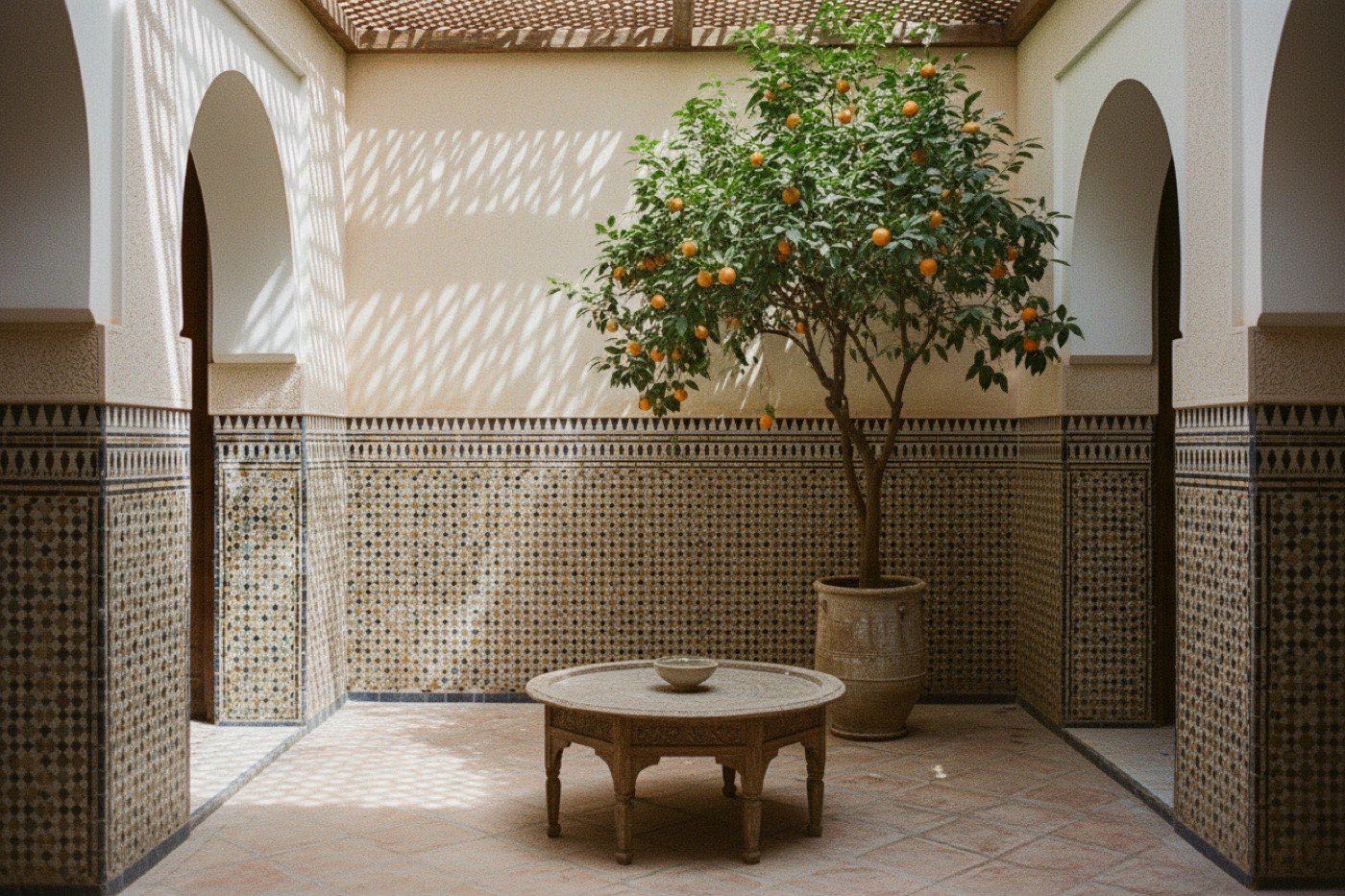
Beyond the chaos of the medina, Marrakech reveals quieter pleasures. The Majorelle Garden, created by French painter Jacques Majorelle and later owned by Yves Saint Laurent, offers a serene oasis of exotic plants and vivid blue buildings. The Bahia Palace showcases the refinement of Moroccan architecture, its rooms arranged around courtyards, every surface decorated with carved cedar, painted ceilings, or intricate stucco work. Riads, traditional houses built around interior courtyards, have been converted into intimate hotels that provide refuge from the medina's intensity.
Fes, Morocco's oldest imperial city, possesses a medina even more labyrinthine than Marrakech's. Here, the medieval city remains largely intact, a UNESCO World Heritage site where donkeys still transport goods through passages too narrow for vehicles. The tanneries, where leather has been processed using traditional methods for centuries, offer a glimpse into pre-industrial craft production. The Al-Qarawiyyin University, founded in 859 CE, is considered the world's oldest continuously operating educational institution.
The Atlas Mountains provide dramatic contrast to the cities. The High Atlas, with peaks reaching over 4,000 meters, offers trekking through Berber villages where life follows rhythms unchanged for generations. The Todra Gorge, with its sheer rock walls, and the Dades Valley, with its kasbahs and rose gardens, showcase the region's stark beauty. In winter, the mountains receive snow, and the resort of Oukaïmeden offers the surreal experience of skiing in North Africa.
The Sahara Desert, accessible from towns like Merzouga, presents the ultimate Moroccan experience. Camel treks into the Erg Chebbi dunes, camping under stars so numerous they seem impossible, sunrise over the sand sea—these are moments that transcend typical tourism. The desert's silence and vastness offer a counterpoint to the sensory overload of the cities, a space for contemplation and awe.