New Zealand's isolation has shaped both its ecology and its culture. Separated from other landmasses for millions of years, the islands developed unique flora and fauna found nowhere else on Earth. The absence of land mammals (until human arrival) allowed birds to evolve into ecological niches usually occupied by mammals, resulting in species like the flightless kiwi and the massive, now-extinct moa. This isolation also meant that when Polynesian voyagers arrived around 1300 CE, they found a land unlike any they had known.
The Māori, New Zealand's indigenous people, developed a rich culture deeply connected to the land. Their language, traditions, and worldview remain integral to New Zealand's identity, with Māori place names, concepts, and customs woven into daily life. The Treaty of Waitangi, signed in 1840 between Māori chiefs and the British Crown, remains a living document whose interpretation continues to shape the nation's politics and identity. Visitors can engage with Māori culture through marae visits, traditional performances, and the many museums and cultural centers that present Māori history and art.
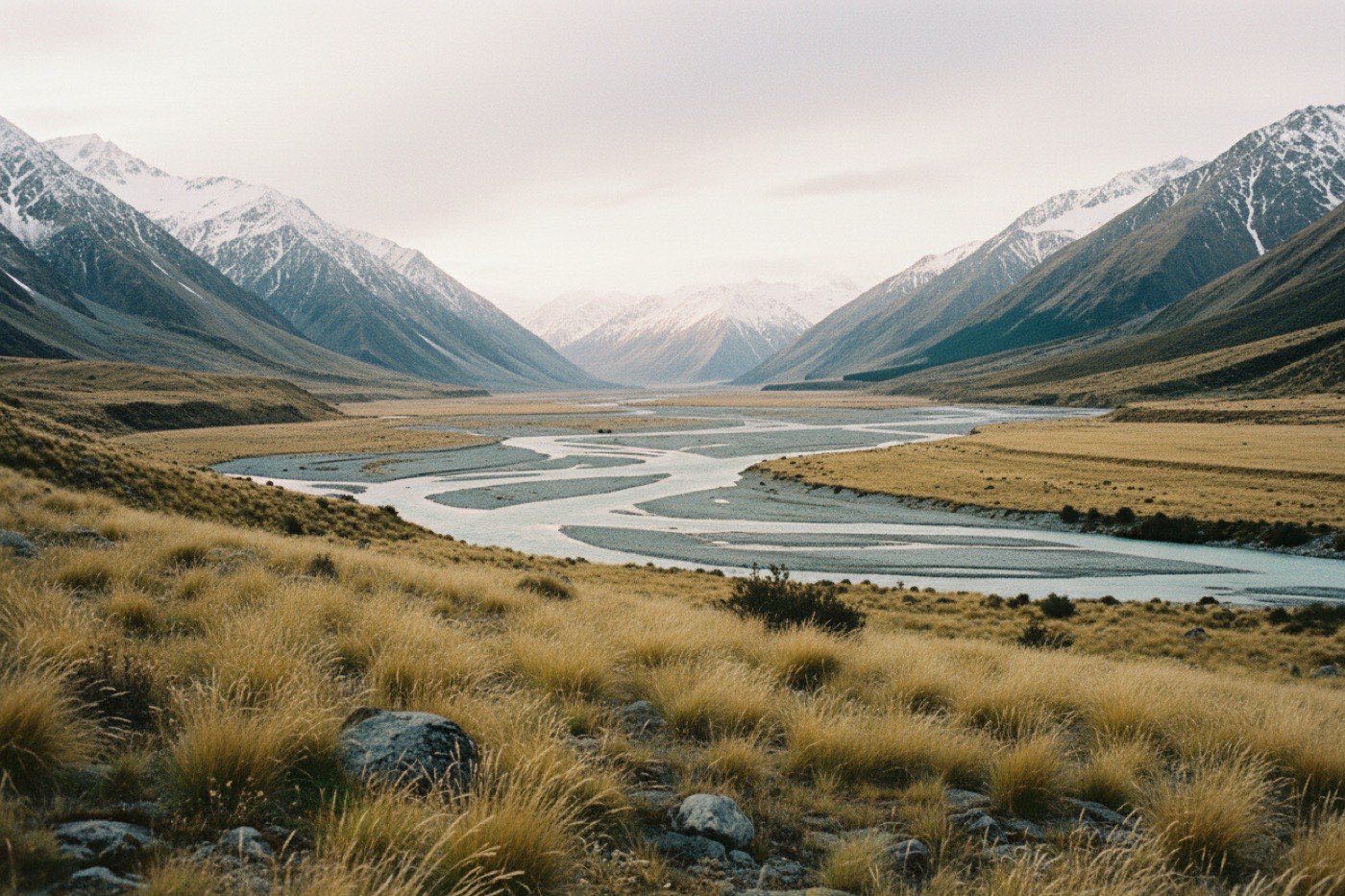
The South Island is often considered New Zealand's scenic crown jewel. The Southern Alps run down its spine, with peaks reaching over 3,000 meters and glaciers descending toward the coast. Fiordland, in the southwest, is a landscape of dramatic fjords carved by ice age glaciers, with Milford Sound being the most famous. The West Coast's rainforests receive meters of rain annually, creating lush temperate forests where ancient trees grow. The east coast, by contrast, is drier, with the wine regions of Marlborough and Central Otago producing world-class Sauvignon Blanc and Pinot Noir.
Queenstown has become synonymous with adventure tourism, offering everything from bungy jumping (invented here) to jet boating, skydiving, and skiing. Yet the surrounding region rewards slower exploration: the historic gold mining towns of Arrowtown and Clyde, the turquoise waters of Lake Tekapo, the hiking trails of Mount Cook National Park. The Routeburn and Milford Tracks are considered among the world's finest multi-day hikes, traversing landscapes of such beauty that the New Zealand government established a booking system to prevent overcrowding.
The North Island, while less dramatically mountainous, offers its own attractions. Rotorua's geothermal activity creates a landscape of bubbling mud pools, geysers, and hot springs, with the sulfurous smell a constant reminder of the volcanic forces beneath. The Bay of Islands, where the Treaty of Waitangi was signed, combines historical significance with beautiful coastal scenery. Wellington, the capital, punches above its weight culturally, with a thriving arts scene, excellent museums (including Te Papa, the national museum), and a café culture that rivals much larger cities.
New Zealand's food scene has evolved from its British colonial roots to embrace local ingredients and global influences. Green-lipped mussels, lamb raised on lush pastures, and kumara (sweet potato) feature prominently. The country's wine industry, though small by global standards, has earned international respect, particularly for its Sauvignon Blanc and Pinot Noir. The flat white, a coffee drink that originated in either New Zealand or Australia (both claim it), has become a global phenomenon.