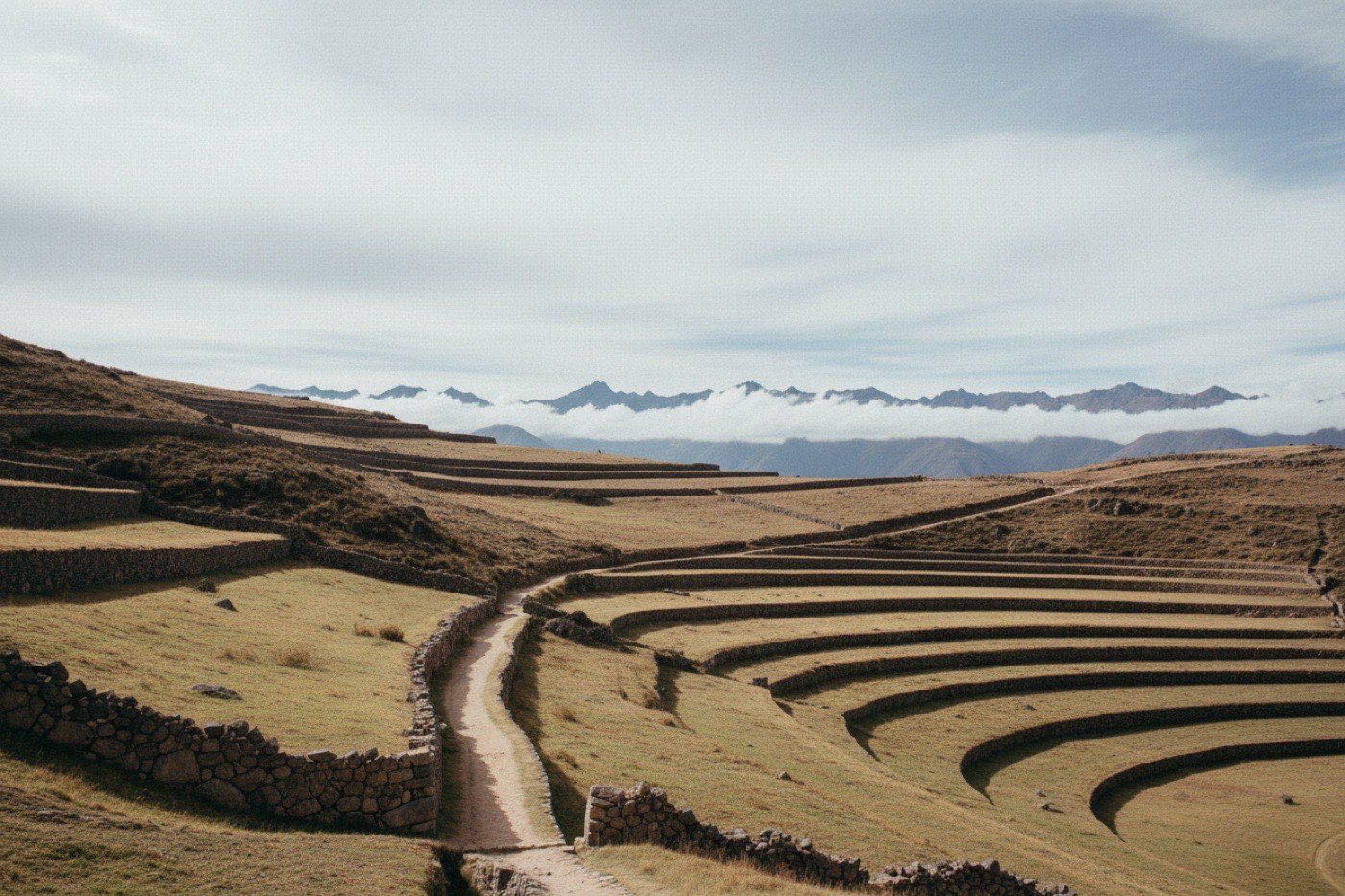
Peru is a country of staggering geographic and cultural diversity, where the Andes Mountains form a spine running the length of the nation, separating the arid Pacific coast from the lush Amazon basin. This varied landscape has given rise to distinct regional cultures, from the highland Quechua communities who maintain Incan traditions to the coastal populations whose cuisine has become a global phenomenon.
Machu Picchu, the 15th-century Incan citadel perched on a mountain ridge above the Sacred Valley, remains Peru's most iconic sight. Despite the crowds, the site retains its power to awe: the precision of the stonework, the integration with the natural landscape, the mystery of its purpose and abandonment. The journey there, whether by train through the Urubamba Valley or via the multi-day Inca Trail, builds anticipation and provides context for this remarkable achievement of pre-Columbian engineering.
Cusco, the former Incan capital, serves as the gateway to Machu Picchu but deserves extended exploration in its own right. Spanish colonial churches sit atop Incan foundations, their baroque interiors a stark contrast to the precisely fitted stone walls below. The Plaza de Armas, surrounded by arcades and churches, pulses with life as locals and travelers mingle. The nearby Sacred Valley holds numerous archaeological sites, traditional markets, and villages where Quechua is still the primary language.
Lima, the capital, sprawls along the Pacific coast, a city of nearly ten million that encompasses both colonial grandeur and modern sprawl. The historic center, with its ornate balconies and grand plazas, speaks to the city's importance during the Spanish colonial period. But Lima's current claim to fame is its food scene, which has elevated Peruvian cuisine to international prominence. Ceviche, the national dish of raw fish cured in citrus juice, reaches its apotheosis here, while restaurants like Central and Maido have redefined what Peruvian cooking can be.
The Amazon basin covers more than half of Peru's territory, a vast expanse of rainforest accessible from cities like Iquitos and Puerto Maldonado. Here, the biodiversity is overwhelming: thousands of bird species, pink river dolphins, giant otters, and an almost incomprehensible variety of plant life. Indigenous communities maintain their traditional ways of life, their knowledge of the forest's medicinal and practical uses accumulated over millennia.
Lake Titicaca, straddling the border with Bolivia, is the world's highest navigable lake and holds deep spiritual significance for Andean peoples. The Uros people live on floating islands made of totora reeds, a tradition that began as a defensive measure but continues today as a unique way of life. The lake's islands, including Taquile and Amantaní, offer homestay experiences where visitors can participate in daily activities and witness textile traditions that predate the Incas.